Episode 01. What is a "Pump"?
Summary
A pump is equipment that transports fluid. So how much does energy need to move the fluid to the desired location? In this episode, we briefly describe the Bernoulli equation and use this equation to explain the calculation of pump work. Finally, we explain the type of pumps.
1. Introduction
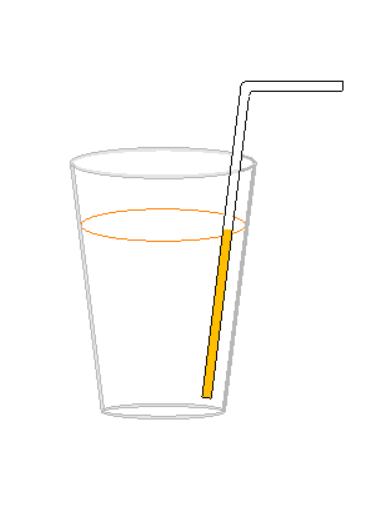
A pump is a representative fluid transport equipment and can be encountered quite often. Before describing the pump, imagine drinking juice in a cup using a straw. If you don’t do anything, the liquid can’t rise through the straw by itself. However, what if you drink juice with a straw? The air in the straw is removed, then the pressure inside the straw is lowered. The liquid rises due to the difference between the internal pressure of the straw and external pressure.
Just as you pull up the juice through a pressure – reducing operation, the pump changes the energy of the fluid by external manipulation. And the fluid whose energy has changed (perhaps increased) transports to its destination. For transporing the fluid to the desired point, we need to calculate how much external manipulation is required.
2. Calculation of Pump Work
The most associated equation in calculating the pump’s work is the Bernoulli equation. There are several assumptions when using the Bernoulli equation.
Assumption
- The flow must be imcompressible. Even if the pressure changes, the density must not change.
- There should be no change over time. (Steady state)
- It applies only to one streamline
- There is no energy exchange outside the flow
If these assumptions are applied, it can be used that the sum of kinetic energy, potential energy, and pressure energy is always constant. The equation is expressed as follows.
Bernoulli Equation
\( {\small\displaystyle\begin{align} \frac{mv^2}{2}\,+\,mgh\,+\,PV \quad&=\quad Constant \\[15pt] or \\[15pt] \frac{v^2}{2}\,+\,gh\,+\,\frac{P}{\rho} \quad&=\quad Constant, \qquad\frac{m}{V} \,=\,\rho \tag*{} \end{align} } \)
Then, let’s know how the equation is applied to calculate pump work. Imagine pump transport system like (Figure 1.1). As shown in the figure, there are three points. Each point is the pump’s suction, discharge point, and destination of the fluid.

(Figure 1.1) Pump transport system
First, let’s consider points 2 and 3. (Eq 1.1) is the Bernoulli equation about point 2 and 3. Since it is the equation when all the assumptions are satisfied, it needs to be modified like (Eq 1.2).
\( {\small\displaystyle\begin{align} \frac{v_2^2}{2}\,+\,gh_2\,+\,\frac{P_2}{\rho} \quad&=\quad \frac{v_3^2}{2}\,+\,gh_3\,+\,\frac{P_3}{\rho} \tag{Eq 1.1} \\[15pt] \frac{\alpha_2v_2^2}{2}\,+\,gh_2\,+\,\frac{P_2}{\rho} \quad&=\quad \frac{\alpha_3v_3^2}{2}\,+\,gh_3\,+\,\frac{P_3}{\rho}\,+\,\hat{E_f} \tag{Eq 1.2} \end{align} } \)
α means kinetic energy correction factor(Laminar flow is 2, Turbulent flow is 1.) And the frictional loss energy that occurs as the fluid flows is denoted by Êf. (Eq 1.2) can be rearranged as (Eq 1.3) or (Eq 1.4). (Eq 1.4) is derived by dividing both sides of (Eq 1.3) by the gravitational acceleration. (Eq 1.4) is called Discharge Head, and the unit is [Length]. A detailed discussion of a pump head will be covered in another episode. Now we know about P2.
\( {\small\displaystyle\begin{align} \frac{P_2}{\rho} \quad=\quad \frac{1}{2}\left(\alpha_3v_3^2\,-\,\alpha_2v_2^2\right) \,+\,g(h_3\,-\,h_2)\,+\,\frac{P_3}{\rho}\,+\,\hat{E_f} \tag{Eq 1.3} \\[15pt] \frac{P_2}{\rho g} \quad=\quad \frac{1}{2g}\left(\alpha_3v_3^2\,-\,\alpha_2v_2^2\right) \,+\,(h_3\,-\,h_2)\,+\,\frac{P_3}{\rho g}\,+\,\frac{\hat{E_f}}{g} \tag{Eq 1.4} \end{align} } \)
Next, let’s make an equation about point 1 and point 2. In this case, pump work must be additionally considered. Unlike (Eq 1.3), There is no frictional loss energy in (Eq 1.5). Instead of Êf, the efficiency η includes the frictional loss energy. (Eq 1.5) can be arranged as (Eq 1.6). And if the efficiency is decided, we can calculate the pump work.
\( {\small\displaystyle\begin{gather} \frac{\alpha_1v_1^2}{2}\,+\,gh_1\,+\,\frac{P_1}{\rho}\,+\,\eta W_p \quad=\quad \frac{\alpha_2v_2^2}{2}\,+\,gh_2\,+\,\frac{P_2}{\rho} \tag{Eq 1.5} \\[15pt] \eta W_p \quad=\quad \frac{1}{2}\left(\alpha_2v_2^2\,-\,\alpha_1v_1^2\right)\,+\,g(h_2\,-\,h_1)\,+\,\frac{1}{\rho}(P_2\,-\,P_1) \tag{Eq 1.6} \end{gather} } \)
3. Type of Pumps
Pumps can be classified into 1) Turbo Type, 2) Positive Displacement Type, 3) Special Type. And they can be further subdivided.
1) Turbo Type
– Centrifugal pump
– Axial flow pump
2) Positive Displacement Type
– Reciprocating pump
– Rotary pump
3) Special Type
Apart from above mentioned, there are various types of pumps. Since each type has its own characteristics, it is necessary to select an appropriate pump based on considerations such as viscosity, the pressure ratio of transported fluid, operating condition, and so on. We are going to learn about the criteria for selecting pumps and post about the characteristics of each pump in other episodes.
Nomenclature
\({\small\displaystyle E_f}\) : frictional loss energy
\({\small\displaystyle \hat{E}_f}\) : specific frictional loss energy
\({\small\displaystyle g}\) : gravitational accerlation
\({\small\displaystyle h}\) : height
\({\small\displaystyle m}\) : mass
\({\small\displaystyle P}\) : pressure
\({\small\displaystyle v}\) : velocity
\({\small\displaystyle V}\) : volume
\({\small\displaystyle W_p}\) : pump work
\({\small\displaystyle \alpha}\) : kinetic energy correction factor
\({\small\displaystyle \rho}\) : density
\({\small\displaystyle \eta}\) : pump efficiency